

Craniosacral Therapy for Infants:
Why Should Your Child Be Evaluated?
The early months of life are a period of rapid neurological and physical development. During this time, even subtle restrictions or tension patterns can influence how comfortably a baby moves, feeds, sleeps, and settles. When an infant seems persistently tense, asymmetrical, or difficult to soothe, many parents are told to wait and see. For some families, however, gentle early support can play an important role in helping a baby adapt more comfortably.
Craniosacral therapy for infants is a light-touch, highly specific approach focused on supporting the nervous system and releasing physical tension within the head, neck, and spine. When used appropriately, it offers a conservative way to address movement restrictions that may otherwise shape how a baby develops over time.
At Legacy Family Chiropractic in McKinney, Texas, Dr. Amber Galipp-Leger is widely sought out for her expertise in gentle infant craniosacral therapy. Families from McKinney, Allen, Frisco, Prosper, and across the greater DFW area often seek her care when they want a thoughtful evaluation that respects both the delicacy and resilience of an infant’s body.
What Craniosacral Therapy Looks Like for Babies
Craniosacral therapy works with the craniosacral system—the membranes, bones, and fluid that surround the brain and spinal cord. In infants, this system is especially responsive, as the skull and spine are still forming and adapting during early growth.
Rather than manipulating or forcing movement, craniosacral therapy uses sustained, gentle contact to identify areas that feel restricted or imbalanced. The intention is to support normal motion and nervous system regulation, not to correct or control the body.
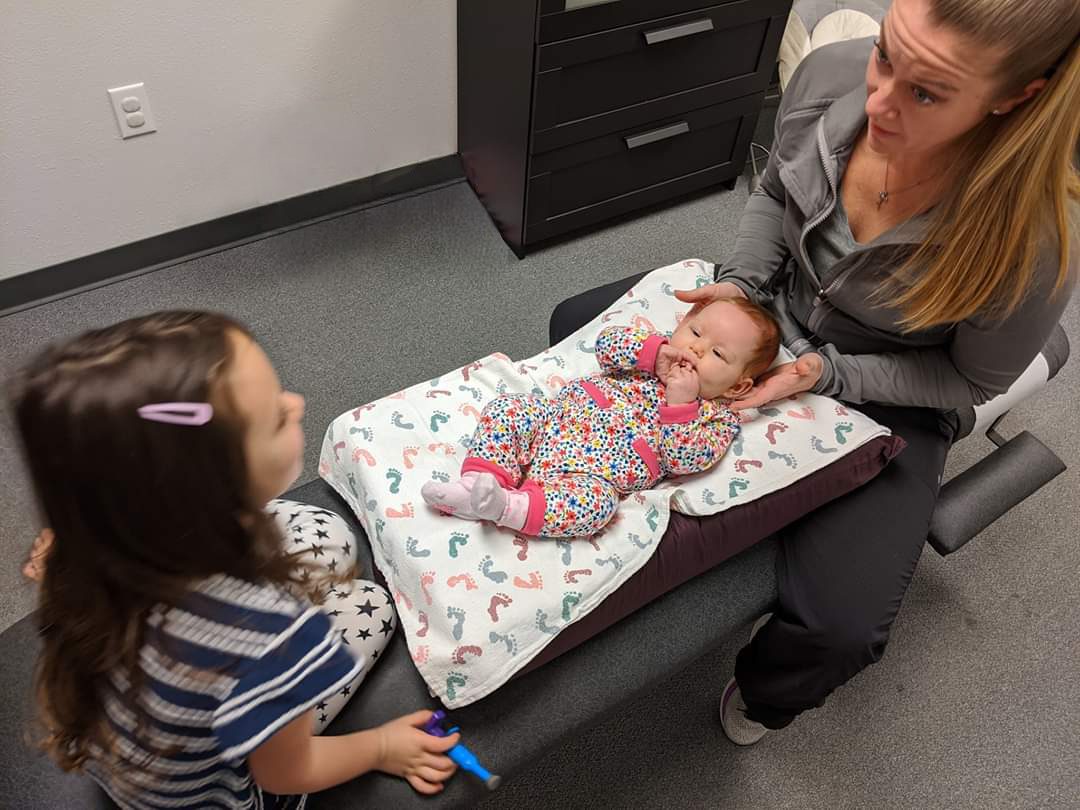
For babies, this work is exceptionally subtle. Sessions are calm and unhurried, and many infants remain relaxed or fall asleep during care. The approach is designed to meet the baby where they are, both physically and neurologically.
Why Infants Commonly Develop Cranial or Nervous System Tension
Birth is a physically demanding experience, even when it is uncomplicated. Time spent in the birth canal, in-utero positioning, prolonged labor, or assisted delivery can all place stress on a baby’s developing structures.
When these forces create areas of restriction—particularly through the skull, neck, or upper spine—the nervous system may have to compensate. Over time, this can influence how freely a baby turns their head, tolerates positions, feeds, or settles.
Craniosacral therapy does not assume that something is “wrong” with a baby. Instead, it recognizes that infants, like adults, can experience physical strain—and that early, gentle support may help prevent those patterns from becoming more ingrained.
How Dr. Amber Uses Craniosacral Therapy in Infant Care
Dr. Amber integrates craniosacral therapy with pediatric chiropractic assessment to address both structural movement and nervous system communication. Her focus is on identifying areas that feel restricted or “stuck,” especially through the cranial bones, cervical spine, and upper thoracic region.
This work is particularly valuable early in life, when improved mobility and balance may reduce the likelihood of secondary issues, such as significant head shape asymmetry or the later need for helmet therapy. Supporting symmetry and motion early allows the body to adapt more naturally as growth continues.
Care is always individualized. Sessions are never forceful, rushed, or formula-driven, and every technique is adapted to the baby’s tolerance and developmental stage.
Indications Parents Commonly Notice
Parents often explore craniosacral therapy when they notice persistent head preference, difficulty settling, apparent stiffness, feeding challenges, or discomfort with certain positions. Some families seek care after being told their baby may be at risk for developing head shape asymmetry.
While craniosacral therapy does not diagnose or treat medical conditions, it may help support comfort and movement when physical tension is contributing to what parents are observing. Clear communication and realistic expectations are always emphasized.
Collaboration with pediatricians, lactation consultants, or other providers is encouraged whenever appropriate.
Our Conservative and Collaborative Approach
Infant craniosacral therapy at Legacy Family Chiropractic is offered as supportive care—not as a replacement for medical evaluation or developmental monitoring. Dr. Amber works with families who value careful explanation, conservative decision-making, and coordination with other professionals when needed.
If a baby’s needs extend beyond musculoskeletal or nervous system support, referral to or collaboration with pediatric specialists or therapists may be recommended.
When to Consider Craniosacral Therapy for Your Baby
If your baby seems persistently tense, asymmetrical, uncomfortable with movement, or difficult to soothe, it may be worth exploring whether physical tension is playing a role. Early evaluation allows these patterns to be addressed thoughtfully, before they become habitual.
Infant craniosacral therapy is commonly used alongside routine pediatric care and does not replace medical advice or diagnosis. Always consult your pediatrician regarding developmental or medical concerns.
Serving McKinney and the Greater DFW Area
Legacy Family Chiropractic is located in McKinney, Texas and serves families from Allen, Frisco, Prosper, and surrounding North Dallas and DFW communities. Many parents seek out Dr. Amber’s craniosacral expertise because they want gentle, informed care during the earliest and most formative stages of development.
The focus is always on listening, thoughtful assessment, and helping parents feel confident in the care their child is receiving.
Support Your Baby’s Comfort Early
If you are seeking gentle, conservative support for your baby’s nervous system and movement, Dr. Amber Galipp-Leger offers infant craniosacral therapy designed to respect your baby’s developing body.
Call or text (214) 880-6330, or use our Appointment Request form (based on availability) to schedule an infant evaluation and learn whether craniosacral therapy may be appropriate for your child.
Medical disclaimer: This content is for educational purposes only and does not replace medical advice, diagnosis, or treatment. Always consult your pediatrician regarding infant health, feeding concerns, reflux symptoms, and persistent crying.
Frequently Asked Questions
Neck pain does not cause migraines, but restricted cervical movement, joint irritation, and muscle tension can act as triggers in people who are prone to migraines. Many patients notice neck stiffness or base-of-skull discomfort before migraine symptoms begin.
In many cases, headaches labeled and treated as “migraines” are strongly influenced by unresolved neck tension, joint restriction, or degenerative changes in the cervical spine. When pain repeatedly begins at the base of the skull, worsens with posture, or is accompanied by neck stiffness, the cervical joints and surrounding muscles are often a significant contributing factor. Chiropractic care does not treat migraines as a neurological disease, but it can address cervical joint dysfunction and mechanical neck stress that may be driving or perpetuating headache symptoms that are otherwise managed only with medication.
Migraines are neurological in nature and often involve throbbing pain, sensitivity to light or sound, nausea, or visual changes. Tension headaches are typically related to muscle tightness and feel like a steady pressure or ache around the head or temples.
Nutrients such as magnesium, riboflavin (B2), and vitamin D3 play important roles in nervous system regulation, muscle function, and inflammatory balance and are commonly discussed in migraine prevention. When combined with foundational lifestyle factors—such as adequate nutrition, not smoking, limiting alcohol consumption, and managing physical stress—nutritional support has shown to help extend the time between migraine episodes or shorten their duration of a migraine for some individuals, even though vitamins are not a treatment during an active migraine episode.
Disc Injuries
Facet Syndrome
Lower Back Pain